
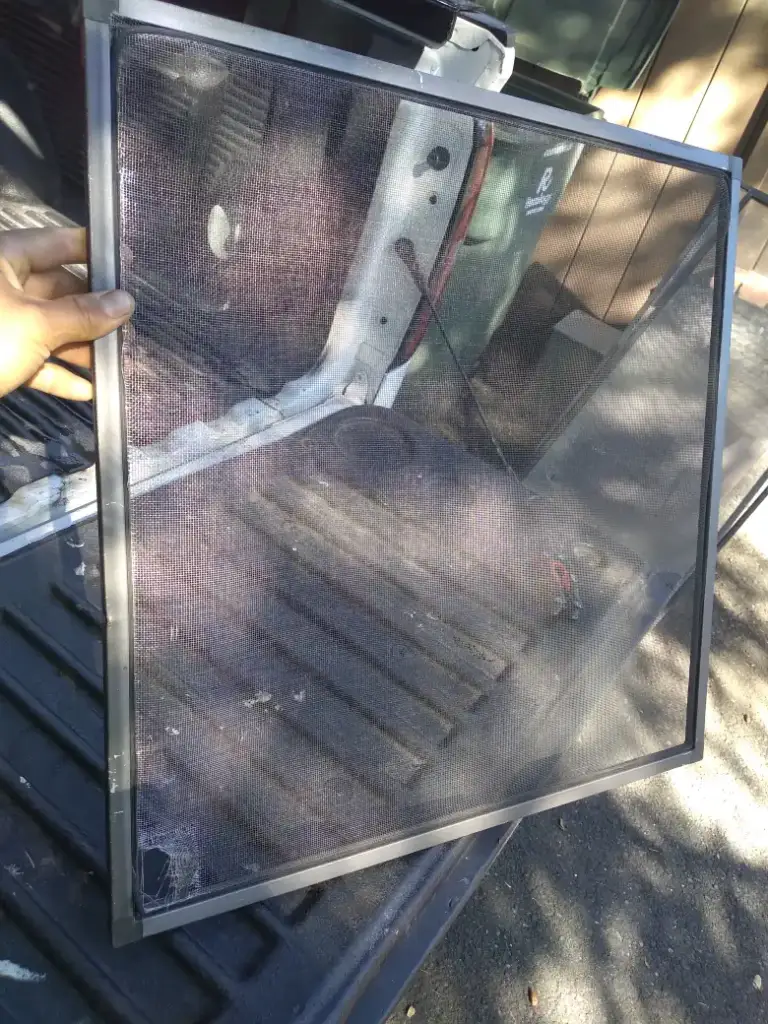
To clean a window screen, take it out, brush or vacuum off the dry dust, wash both sides with mild soapy water and a soft brush, rinse gently with a hose, let it dry, and put it back in the window it came from. For most houses that’s an afternoon’s work with things already in the garage. Below is each step, plus how to spot a screen that needs repair instead of a wash.
What do you need to clean window screens?
A soft-bristle brush, a vacuum with a brush attachment, a bucket of warm water with a little mild dish soap, a garden hose with a gentle spray setting, and some old towels. Add painter’s tape and a marker for labeling, and a tarp or old sheet to lay the screens on.
Skip anything harsh. Andersen’s instructions for its insect screens call for nothing stronger than mild soapy water and a soft-bristle brush, and Ply Gem’s care guide warns that aluminum mesh can be dented or creased if too much pressure goes on it, so stiff brushes and scouring pads stay in the drawer.
How do you get a screen out without bending it?
Work from inside, find the tabs, latches or spring plungers along the frame, and ease the screen out by its frame, never by the mesh. Many lift up into the top channel, then swing out at the bottom. Label each one with tape as it comes out, by room and window.
- Take a phone photo of each window before its screen comes out, which settles any question about which way it faces later.
- Stack screens flat, not leaning against a wall, so the frames don’t bow.
- On upper floors, remove screens from inside rather than reaching out from a ladder.
- Leave any screen that won’t release easily. Forcing it is how corners crack.
What's the right way to wash a window screen?
Dry dust first, then soap, then a gentle rinse. Brush or vacuum both sides while the screen is dry, wash the mesh and frame with mild soapy water and a soft brush, then rinse with the hose on a light spray. Wet dust turns to mud, so the dry step matters.
- Lay the screen flat on a towel or tarp on the driveway or lawn.
- Vacuum or brush both sides, working along the weave rather than pressing into it.
- Wet the screen with a light spray.
- Wash the mesh with soapy water and a soft brush or sponge, using light strokes, then do the frame.
- Rinse until no suds are left. Andersen’s screen cleaning instructions say to rinse thoroughly with clean water.
Keep the nozzle on a gentle setting. Ply Gem tells owners not to use a high-pressure washer on screens, since it could damage them.
How should screens dry before going back in?
Completely, and out of the hot sun. Shake off the extra water, stand each screen on its edge in the shade, and wipe the frame dry with a soft cloth. Putting a damp screen back traps water in the frame channel and catches fresh dust right away, which undoes the work.
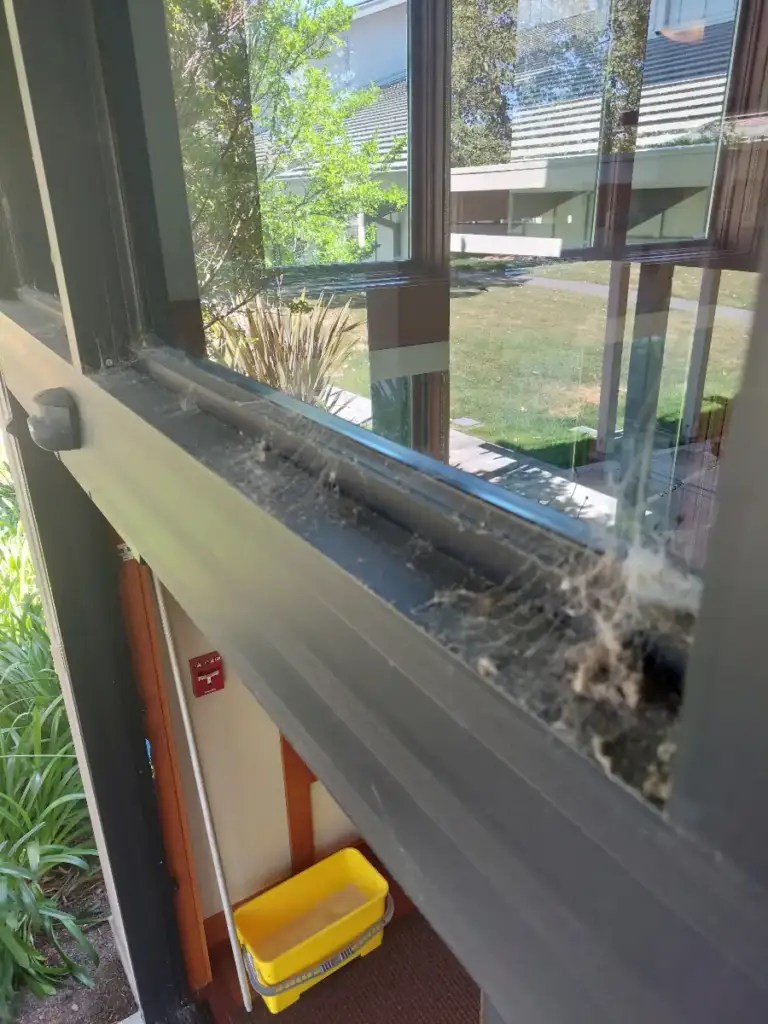
While the screens dry, wipe out the window tracks. Dead bugs, grit and leaves collect there, and a vacuum crevice tool and a damp cloth clear most of it. Then match each label to its window, seat the screen in the top channel, swing it in, and make sure every tab or latch catches.
When does a screen need repair instead of a cleaning?
When the mesh is torn, pulling loose from its spline, or bagging in the middle, or when the frame is bent or a corner has cracked. Cleaning won’t fix any of those, and a screen that doesn’t seal lets bugs in. Small holes can be patched; bigger damage usually means new mesh or a new screen.
Screen repair and new screens are part of our window and screen cleaning work, so a damaged screen can be fixed instead of going back in as it was. It’s also worth calling when the screens are on a second story, there are dozens of them, or you’d like the glass done inside and out on the same visit. Dorota W. had windows and screens cleaned along with other work and wrote, “I don’t think I’ve seen our screens so clean and transparent since we’ve installed our windows.”
How many times a year should screens be washed?
At least once, and more often in dusty or smoky places. Andersen recommends cleaning its screens at least once a year, and every three months in coastal, industrial or agricultural areas with more airborne dirt, dust, smoke or salt spray. Plenty of Sonoma County homes sit near vineyards, farms or the coast.
Fire-season smoke and spring pollen both settle on screens, so a wash in late spring and another in fall suits a lot of homes here. Pairing the fall wash with the gutter cleaning saves a second round of ladders. Our rainy-season exterior checklist has the rest of the fall list.
Questions we hear about this
Can I clean screens without taking them out?
For light dust, yes. Run a vacuum brush over the screen from inside, then wipe it with a damp microfiber cloth while supporting the mesh with your other hand. It won’t match a full wash, since grime trapped in the weave needs soap and a rinse, but it keeps screens presentable between proper cleanings.
Is it OK to pressure wash window screens?
No. A strong stream can stretch fiberglass mesh, dent aluminum mesh or pop the spline out of its groove, and Ply Gem’s care guide tells owners not to use a high-pressure washer on screens. A garden hose on a light spray does the job. There’s more on that in Dave’s tips on hiring a pressure washer.
What causes the gray film on window screens?
Mostly airborne dust and pollen that cling to the mesh, plus cobwebs and, after fire season, smoke residue. Sprinklers that hit the windows add mineral spots. A soap-and-water wash takes off the film; stubborn sprinkler spots may need a second wash, and aiming sprinklers away from the house keeps them from coming back.
Sources
- Andersen Help Center: Clean Your Andersen Insect Screen's Mesh and Frame
- Ply Gem: Window & Door Care and Maintenance