
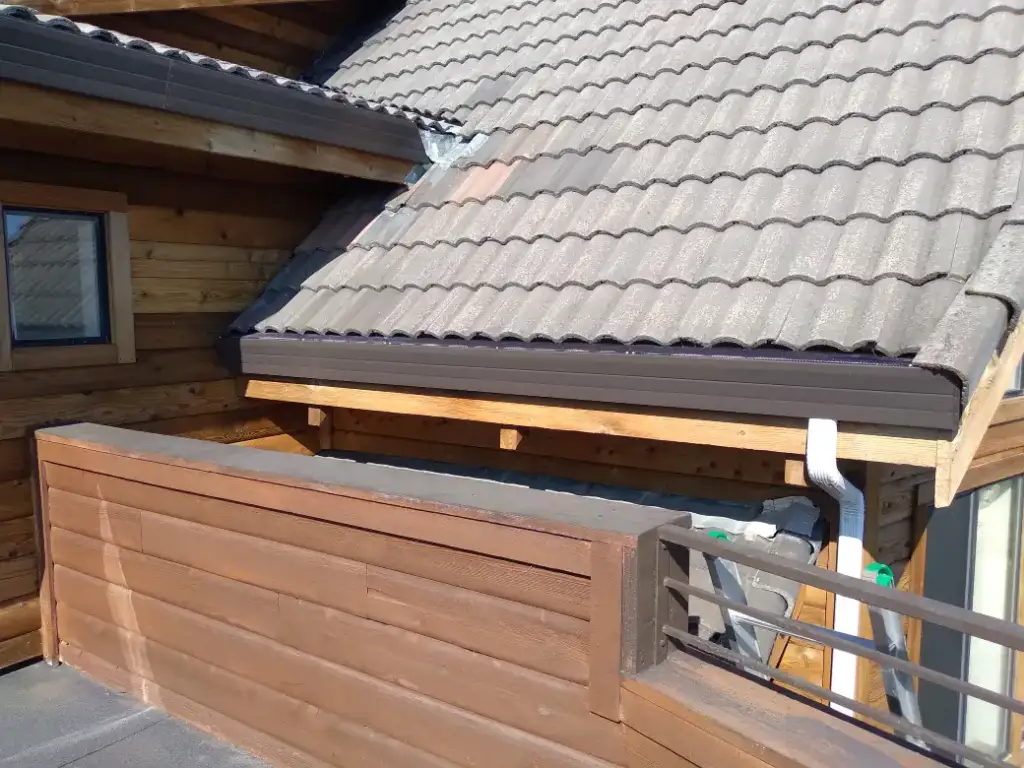
Before the first big storm, walk around the house and check seven things: the gutters, the downspouts, where the water lands, the roof as seen from the ground, moss, the trees overhead, and the vents and drains. Most of it takes an hour with binoculars and a hose. If you’d rather have it handled every year, that’s what our Peace of Mind Program is for.
Are the gutters and downspouts open before the first real storm?
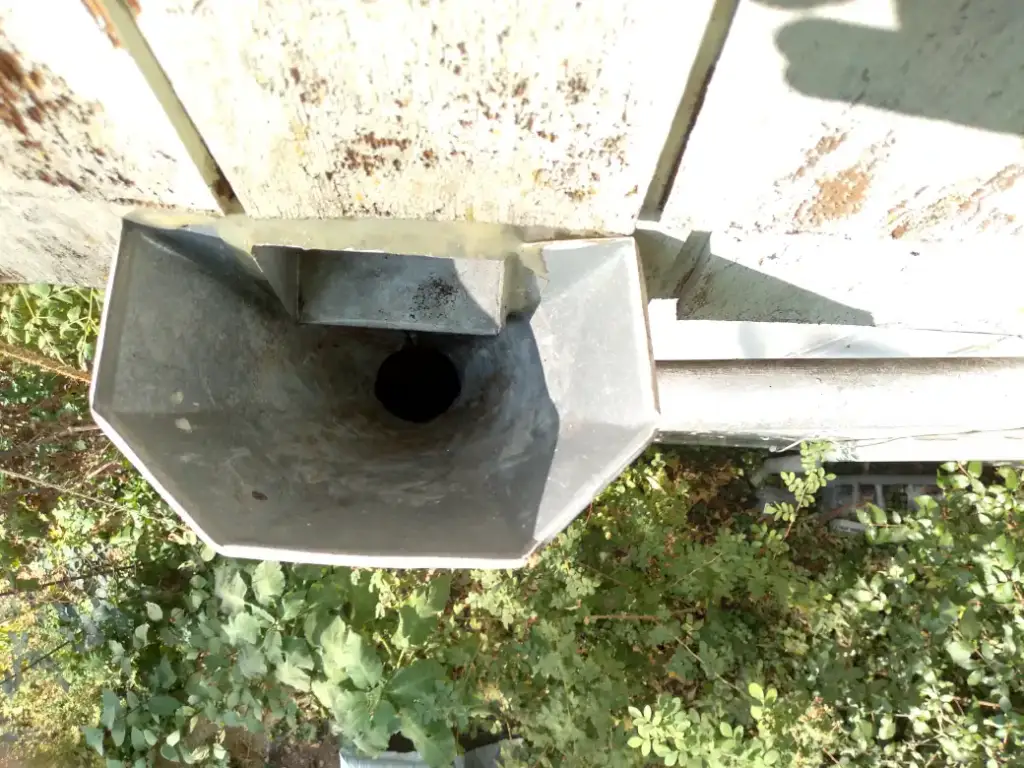
They should be, and a garden hose will tell you. Run water into the far end of each gutter and watch it travel to the outlet and out the bottom of the downspout. Slow draining, water backing up at the outlet, or drips at the seams all need attention before the rain arrives.
Timing matters because the rain comes in bursts. In NOAA’s normals for the Santa Rosa station, December, January and February each average about two days with an inch of rain or more. Those are the days a half-clogged downspout gives up. Our gutter cleaning crew flushes every downspout on a visit, and our gutter maintenance guide covers the do-it-yourself version.
Where does the water go after it leaves the downspout?
Away from the house, onto ground that slopes away or into a drain built for it. A downspout that empties at the foundation, onto a walkway, or toward a neighbor’s yard needs an extension, a splash block or a new location. Watch where the water actually ends up during a storm, not where you assume it goes.
The EPA’s Soak Up the Rain guidance suggests turning downspouts toward a lawn or garden bed where the water can soak in, while cautioning owners to think about where it will flow so it doesn’t cause damage. Extensions that get knocked loose by mowers or kids are worth checking every fall. Larry R.’s review mentions having “a couple of downspouts relocated for better drainage,” which is part of our gutter and downspout repair work.
What can you check on the roof without climbing it?
Plenty, with binoculars from the yard or the street. Look for missing, cracked or curled shingles, slipped tiles, debris piled in valleys and behind chimneys, and flashing that has pulled away where the roof meets a wall, chimney or skylight. Then check the attic or top-floor ceilings for stains after the first rain.
Flashing and shingle repairs belong to a roofer. What we handle is the debris side: clearing valleys and roof edges, cleaning skylights, and the gutters underneath. Anything that looks off is easier to fix in October than in the middle of a December storm.
Is moss or a mat of needles holding water on the roof?
Check the shady slopes first. Green cushions along shingle edges, or brown needle mats in valleys and against chimneys, keep the roof wet through the season and push water sideways instead of down to the gutters. They’re easiest to spot on the north side of the house, where the sun reaches least.
Moss is simpler to remove before the rains soak it. Our roof moss guide explains why it grows where it does and why a pressure washer is the wrong fix, and the roof moss removal page shows how our crew goes about it.
Do any trees over the roof need trimming before winter?
Look for dead limbs, branches resting on or scraping the roof, and anything hanging over the chimney. Wet winter storms bring down weak wood, and branches over the roof drop leaves and needles straight into the gutters. A licensed tree service should handle anything large or near power lines.
CAL FIRE’s defensible space guidelines give a yardstick that works in any season: trim overhanging branches and keep them 10 feet from the chimney. Doing that in fall means less debris in the gutters all winter and one less job before fire season.
Are the vents and yard drains ready for heavy rain?
Clear anything blocking them and fix torn screens. Foundation and crawlspace vents should sit above the soil and mulch, not buried in them, and attic vent screens should be intact. Yard drains, catch basins and the street inlet in front of the house only work when leaves aren’t covering the grates.
If a vent screen needs replacing, use what CAL FIRE recommends for ember protection: 1/16-inch to 1/8-inch noncombustible, corrosion-resistant metal mesh, per its Hardening Your Home guide. The same guide notes that some vent changes reduce airflow and suggests checking with the local building official first. A screen fixed for winter then does double duty in fire season.
What should you watch for during the first big storm?
Water going anywhere it shouldn’t. In daylight, during a heavy downpour, walk around with an umbrella and watch for gutters spilling over the front or the back, spray from downspout joints, puddles along the foundation, and water running toward the house. Inside, check ceilings, window tops and the garage.
Take short videos of anything odd; they show a repair crew exactly where the problem is, even after the sky clears. Stay off ladders and the roof in rain and wind. NOAA notes that the strongest atmospheric rivers can create extreme rainfall and floods, so the time to fix a problem is after the storm passes, not during it.
Questions we hear about this
When is the right time to work through this checklist?
September or October, while the weather is still dry. NOAA’s normals for Santa Rosa show rainfall climbing from October into November and peaking in December, so a checklist done in early fall leaves time to book repairs. A second pass in late winter catches anything the storms loosened.
What if I find something I can't fix myself?
Write it down, photograph it, and call the right trade. Gutter repairs, downspouts added or moved, roof moss, clogged valleys and small dry rot spots at the fascia are work we do; shingle and flashing repairs go to a roofer. Call (707) 940-7875, describe what you found, and Dave can come take a look.
Can someone handle this list for me every year?
Yes, that’s the idea behind Nor-Cal’s Peace of Mind Program. It’s an annual care program, where customers schedule yearly exterior care around what their home needs. Ask about it during an estimate, or call and describe the house, the trees around it and what usually goes wrong in winter.
Sources
- NOAA NCEI 1991-2020 climate normals, Santa Rosa station USC00047965
- U.S. EPA Soak Up the Rain: Disconnect / Redirect Downspouts
- CAL FIRE Ready for Wildfire: Defensible Space
- CAL FIRE Ready for Wildfire: Hardening Your Home
- NOAA: What are atmospheric rivers?