
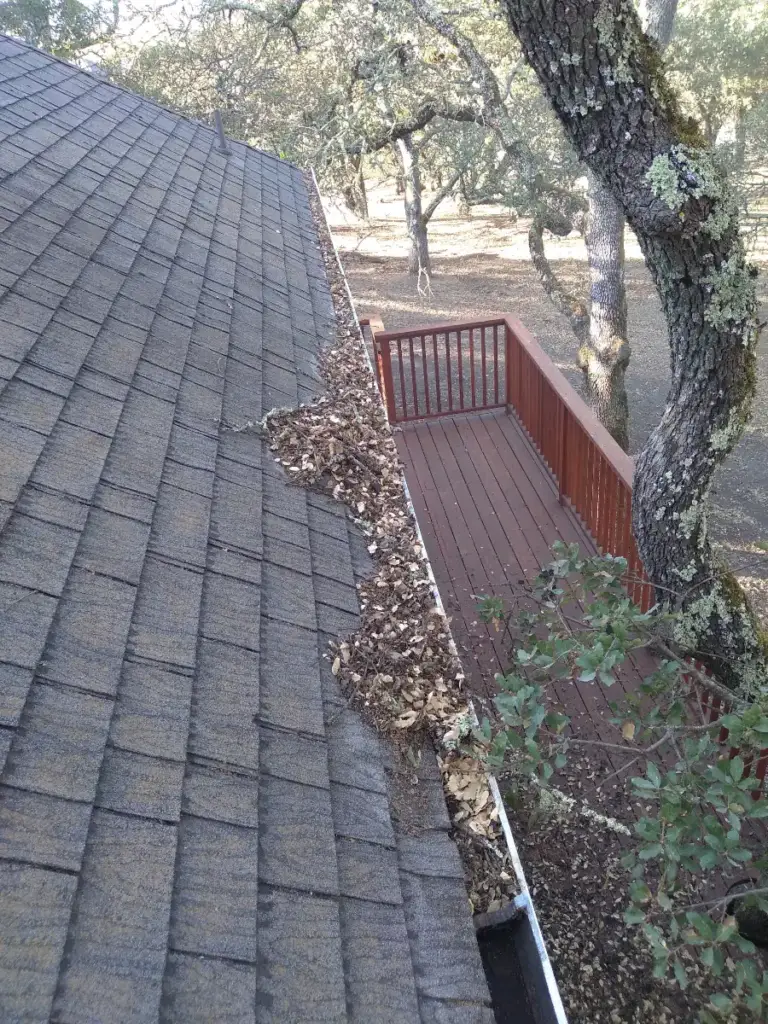
Start with what falls into your gutters, then look at how steep the roof is. Those are the two considerations Dave Stankas, owner of Nor-Cal Maintenance, walks through in his Diamond Certified expert video on choosing gutter covers. Match a cover to both and it has a real chance of working. Miss either one and you can end up with a clogged cover, or rain sailing right past the gutter. Here’s what he means, and how it plays out on Sonoma County houses.
What does Dave say matters most when picking a gutter cover?
The debris. In his Diamond Certified expert video, Dave puts it plainly: “The most important variable is the type of debris that you have going into your system.” A cover works like a filter, so it has to suit what your trees actually drop, from thin needles to broad leaves, seed pods and bark.
The trees he lists are the ones shading a lot of roofs around here: redwoods, pines, eucalyptus, oaks and bay. In the video he calls that material “extraordinarily acidic.” His point is that it doesn’t just block the gutter. Sitting wet in the trough through a winter, it breaks down, and he says it can rot the gutter out fast.
So the first question at the house is a simple one: what’s up there right now? A handful of wet needles tells a different story than a scoop of dry oak leaves.
How do needles and broad leaves call for different covers?
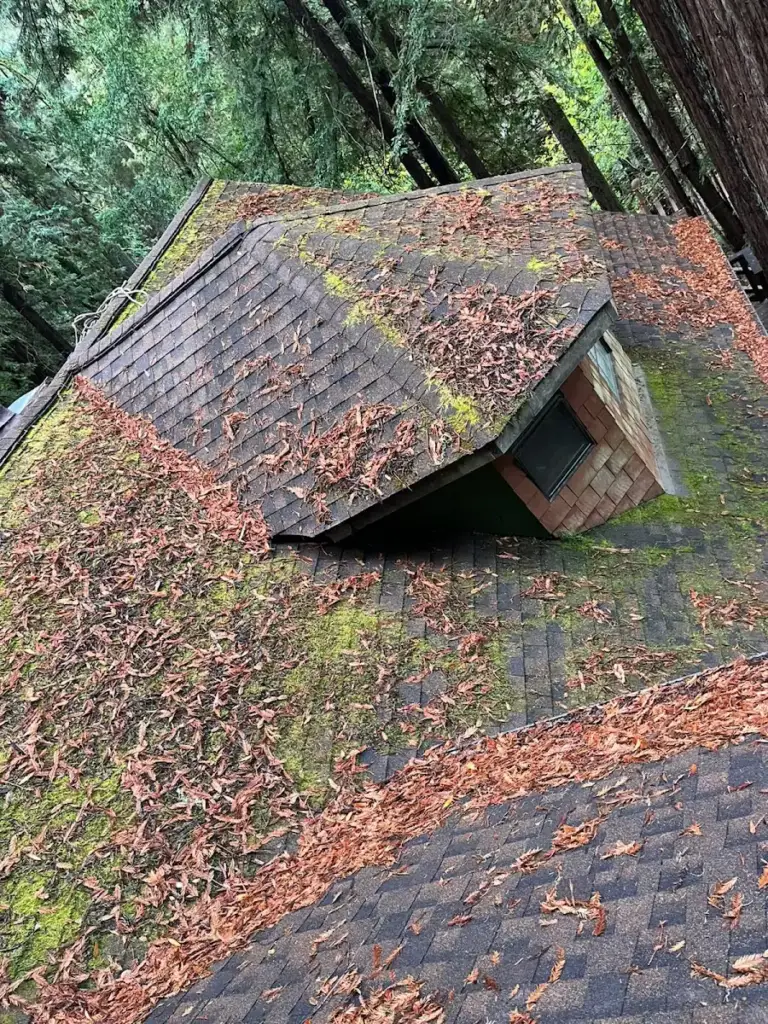
Needles need a finer cover than leaves do. Redwood and pine needles are thin and stiff, so they slip into wide openings and lodge there. Oak and bay leaves are broad and tend to rest on top of a cover until wind or rain moves them along. A cover chosen for one can struggle with the other.
- Redwood and pine needles: the reason finer mesh exists. Coarser screens let them through or catch them halfway, where they knit together into a mat.
- Oak leaves: big and flat, so most covers keep them out of the trough. The trick is getting them to blow or wash off the top instead of piling up.
- Bay leaves: the tree is evergreen, so leaves come down a few at a time all year rather than in one fall drop.
- Eucalyptus: long leaves plus strips of peeling bark, which can drape across a cover and hold other debris in place.
Plenty of yards have more than one of these. A redwood on one side of the house and an oak on the other can mean two different answers along two different runs.
Why does the pitch of the roof matter for a gutter cover?
Because water leaves a steep roof fast. Dave explains in the video that “if your roof is pitched too steep, the water will just come straight off.” On a steep slope, rain can skate across the top of the wrong cover and over the front of the gutter, so the cover has to turn that water down into the trough.
A low-slope roof has the opposite problem. Water moves slowly and debris doesn’t slide off as readily, so a cover that sheds well under a steep roof may hold leaves under a shallow one.
Dave ties this to the installation as well. He wants to be sure “a gutter cover is installed properly and the gutter cover that you’re receiving is the proper one.” Fit at the roof edge counts most on tile and metal roofs, where a cover has to sit under a curved tile or a panel edge without leaving a gap.
Why does Nor-Cal offer 27 types of covers instead of one?
Because debris and roof pitch combine in too many ways for one product to handle. A low ranch house under oaks, a steep two-story under redwoods and a tile roof near eucalyptus each ask for something different. With 27 types to choose from, the cover can follow the house, instead of the house getting whatever one product a company sells.
In the video, Dave describes “so many different options to choose from and varieties, and they’re based on the type of roof that you have, the type of debris, the pitch of the roof.” Gutterglove and Amerimax are two of the brands Nor-Cal installs. Our gutter guard installation page lists the cover types and roof situations we work with.
What does a gutter cover protect against over time?
The slow damage that comes from debris left sitting in the gutter. Dave sums it up in the video: “The gutter cover keeps out the organic debris that clogs the system, which causes irreversible damage to the system.” Clogs send water over the edge in storms, and wet debris keeps working on the metal in between them.
That’s why the match matters. A cover that lets needles through, or holds leaves on top until they slump into the trough, brings the same trouble back on a delay. Even a well-matched cover needs a look now and then as part of a regular gutter maintenance routine.
How can you get ready for a gutter cover estimate?
Look up before you call. Note which trees hang over each side of the roof, and if you can see into a gutter safely from a window or the ground, note what’s in it. Check whether the roof is shingle, tile or metal. Those few facts are what Dave looks at first, and they make the visit quicker.
Then call (707) 940-7875 for a free consultation. Dave comes out, answers your questions and sends a written proposal afterward. To compare the cover families before he arrives, our guide to the types of gutter guards lays them out side by side.
Questions we hear about this
Is debris or roof pitch more important?
Debris comes first. Dave calls it the most important variable in his Diamond Certified video, and roof pitch is the other consideration he names. In practice the two get weighed together: the right mesh for your needles still has to sit at an angle that lets rain drop into the gutter instead of shooting past.
Where does this advice come from?
From Dave’s Diamond Certified expert video, 2 Considerations for Choosing Gutter Covers, linked in the sources below as well. Diamond Certified is run by American Ratings Corporation in Petaluma, and Nor-Cal has held its rating since December 2023. The quotes in this post are his words from that video.
Can the same cover work on every side of my house?
Often, but not always. If one side sits under redwoods and another faces open sky or a single oak, the debris on each side is different, and roof sections can differ in pitch too. Dave looks at each run during the estimate, and the written proposal spells out which cover goes where.